Mississippi adult
An alien-like adult is read across the Mississippi region. The face, bent arm and descending leg form the central posture. “Mama” is an interpretive name, not an established biological identification.
Mississippi basin · Kentucky · Appalachians · Eastern North America
An adult and baby. A hornet at the neck. A serpent approaching. Follow Brett Rosiere’s reading of an interconnected scene in the land.
Look first. Then compare.
The starting point is the landscape: the Mississippi basin, the Great Lakes, the Appalachian ridges and the Gulf coast. Brett reads relationships between proposed figures across that geography, including a baby nestled against an adult’s back and a cord extending toward the Gulf.
The names describe Brett’s interpretation. Satellite terrain, selected map markers and added artwork are labeled separately below. Illustrations help explain the scene; they do not establish literal beings, biological anatomy or an ancient map.
01 · Same source canvas
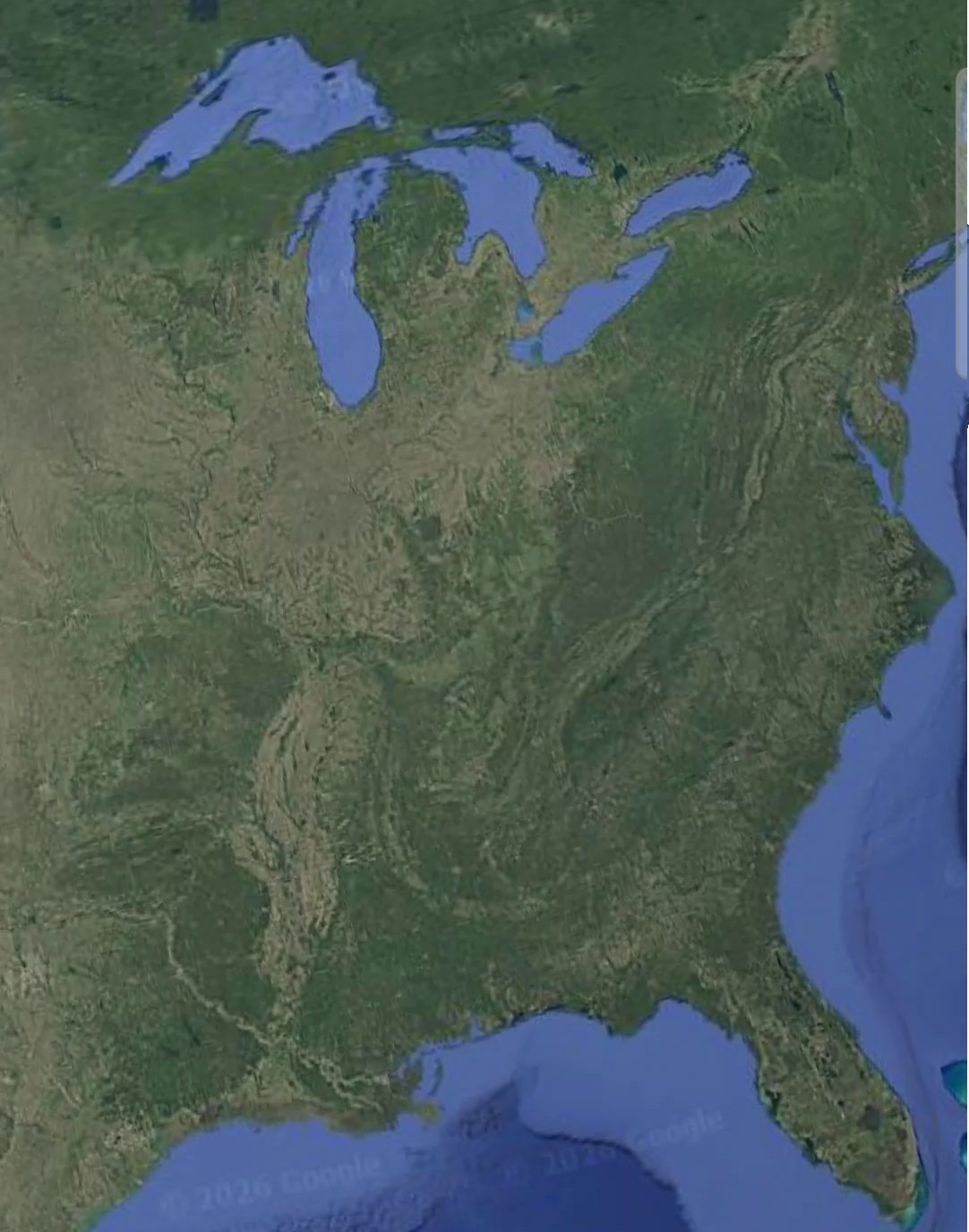
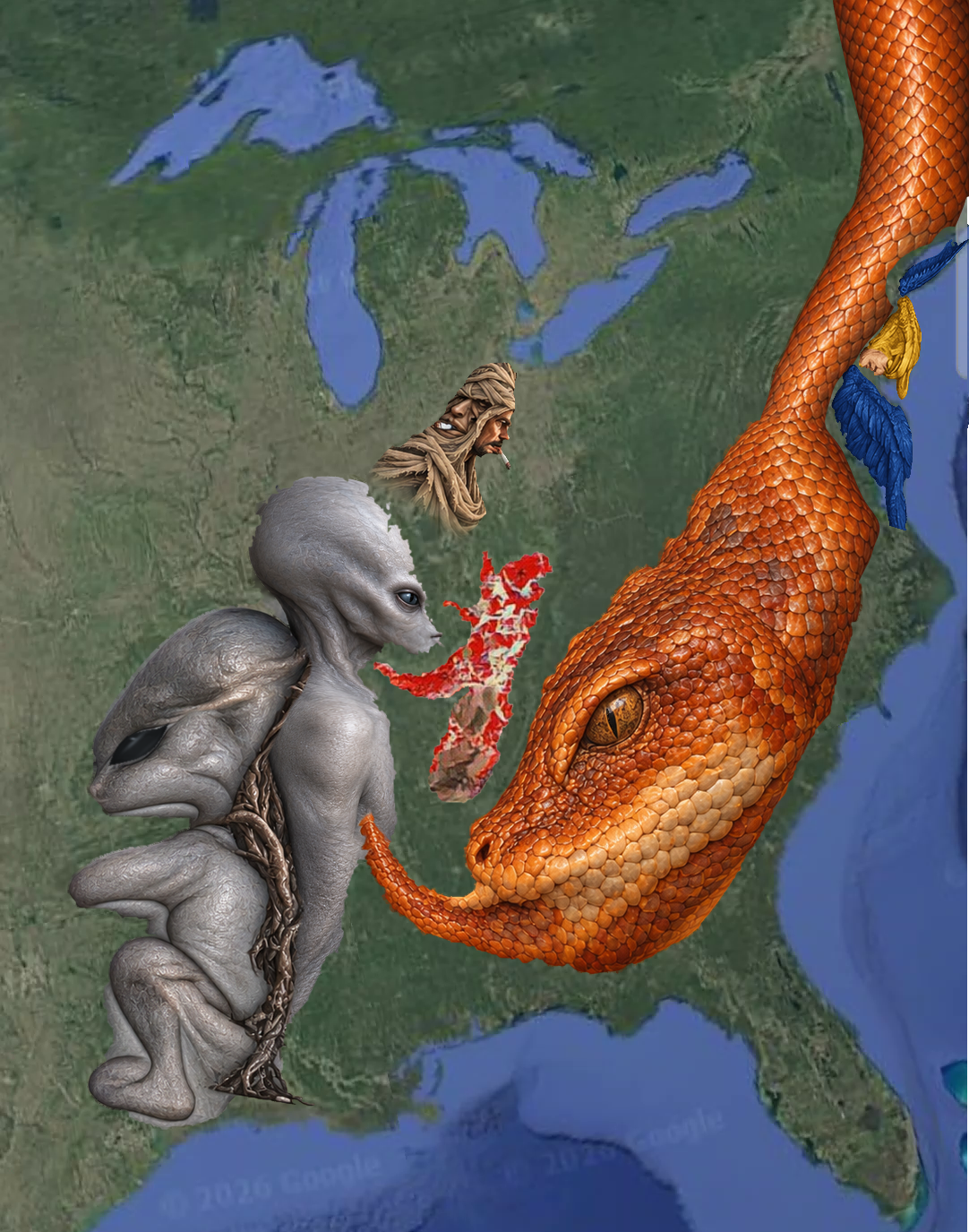
This pair shares an image canvas, so the underlying landscape can be compared directly. The registration preserves an artistic placement, not independently verified anatomical boundaries. Open either image for its full-size source.
02 · Reading the scene
An alien-like adult is read across the Mississippi region. The face, bent arm and descending leg form the central posture. “Mama” is an interpretive name, not an established biological identification.
The baby is nestled against the adult’s back, not held in its arms. The proposed cord extends south toward New Orleans and the Gulf. The illustrated cord and placenta remain tentative connecting features.
The insect is read as stinging the adult’s neck. Different source versions contain different body and taper placements; the illustration must not silently close those gaps.
The serpent is read along the eastern ridges, with a forked tongue directed toward the adult. Its long illustrated extension is part of the artistic interpretation.
The winged figure occupies the northeastern edge of the composition. The supplied source cuts off part of the figure; the missing edge is not reconstructed here.
The two-faced figure sits above the central interaction. The feathers, clothing and smoking detail belong to the artwork. No specific tribal identity is established.
03 · Later artistic expressions
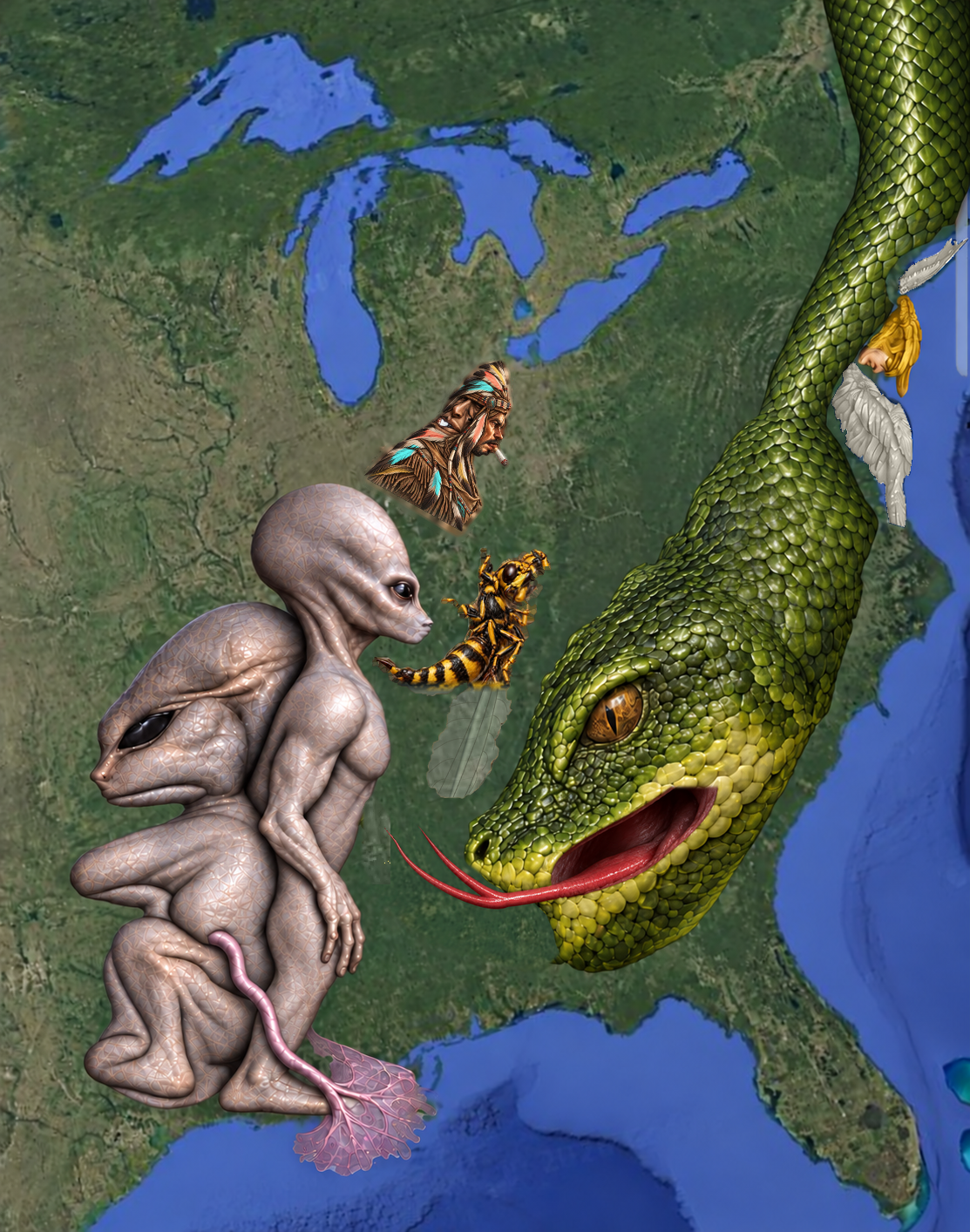
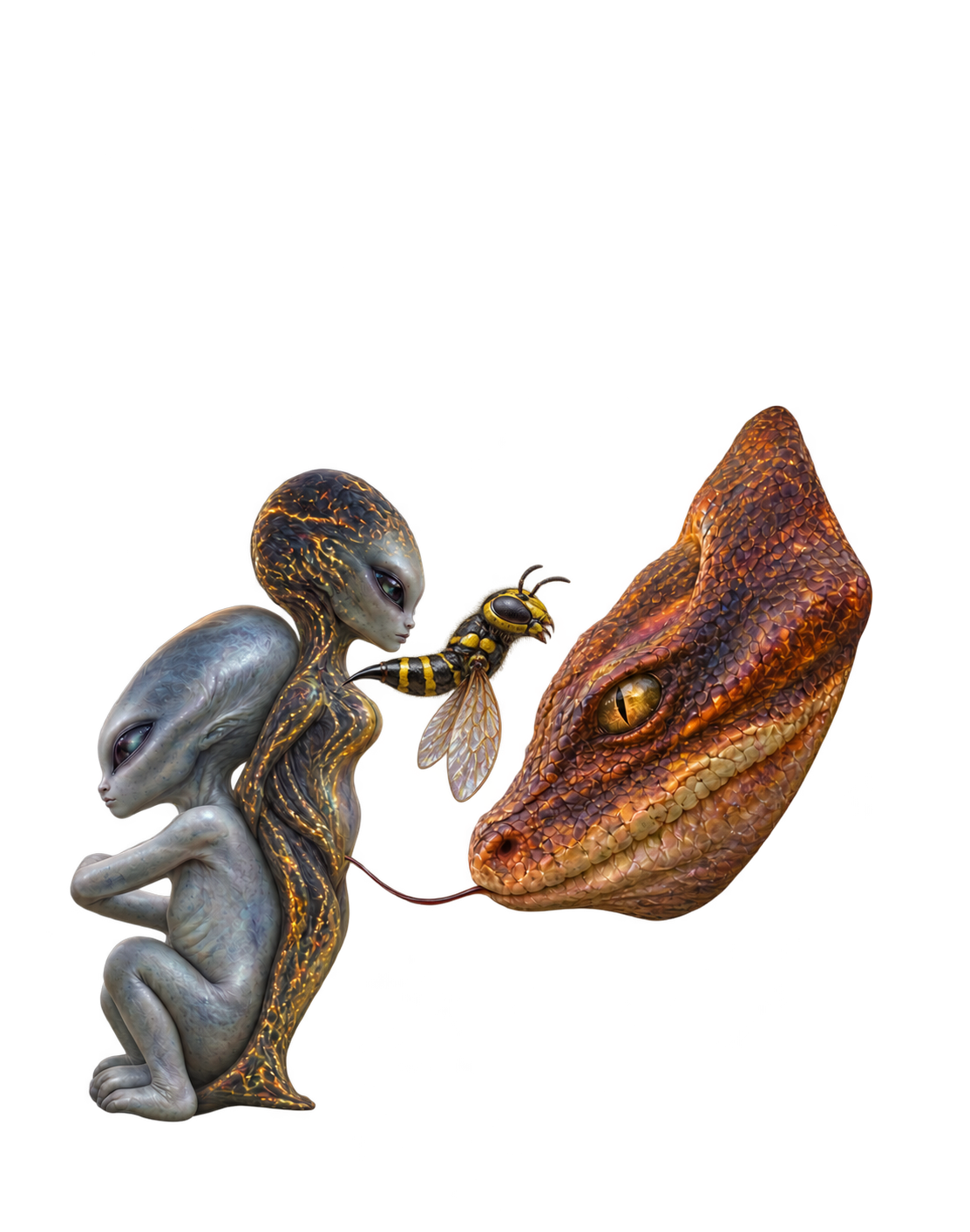
The complete composition shows how the six figures relate in Brett’s reading. The later four-figure study explores another surface treatment. Newer does not mean more geographically precise.
Faces, scales, feathers, insect anatomy and the placenta shape are artistic additions. For judging the land itself, return to the original terrain and the historical marker frames below.
Explore the Northeast Angel’s own terrain, artwork and film →
04 · Source-selected landmarks
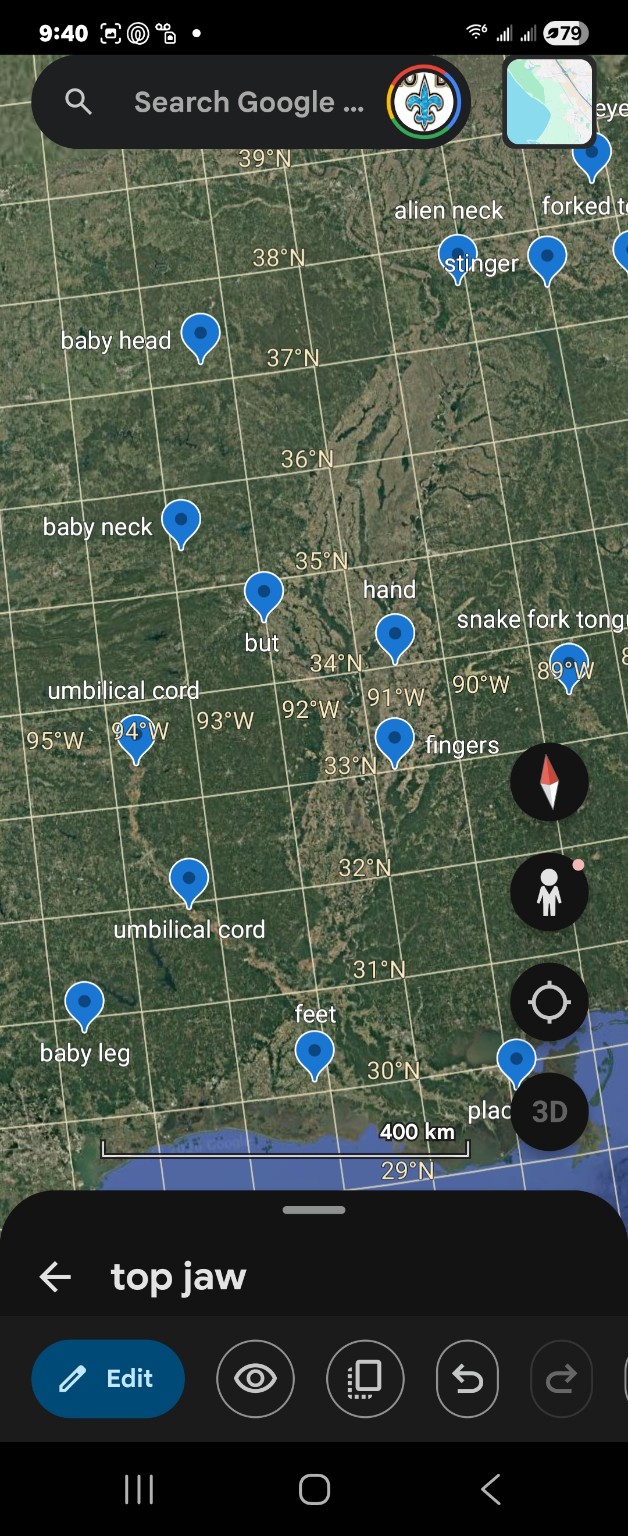
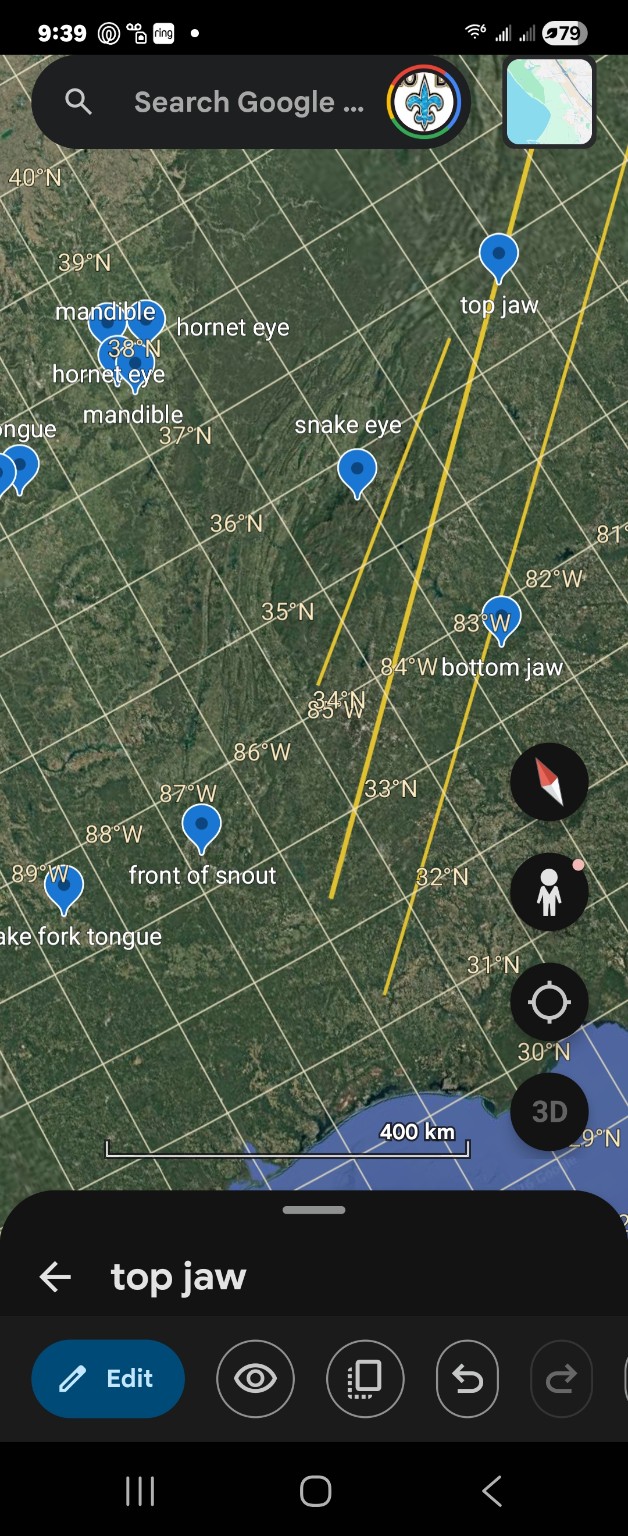
05 · The recovered film collection
Four distinct Tableau films are available here, plus Miss America for the wider continental setting. These are smaller 480-pixel-wide web-viewing copies, retaining the complete source frames and timelines with re-encoded audio. The October 22 cinematic is the latest dedicated Tableau film recovered in this review. Earlier shorts retain their original narration and artwork; later image corrections are shown above rather than implied to be present in every film.
4:35 · 22 October 2026
The latest recovered edition of this film corrects the baby’s position to the adult’s back and places the hornet at the adult’s neck. It compares the scene with Mexica and related Nahua creation traditions.
Open the video directly1:00 · 20 October 2026
The last of the three short Tableau edits uses the selected artwork to introduce the adult, baby, cord, hornet and serpent.
Open the video directly1:00 · 20 October 2026
A different artistic treatment of the same proposed scene, preserved as a separate earlier cut.
Open the video directly1:00 · 20 October 2026
The first short uses colored annotations and source views. Compare it with the later artistic versions rather than treating the cuts as interchangeable.
Open the video directly4:00 · 22 October 2026
A related film about the larger continental portrait and the Tableau nested within it. Miss America is a separate interpretation, not another name for the Mississippi adult.
Open the video directly06 · Sources, Scripture and mythology
Revelation 12 offers a woman, child, dragon and torrent. Genesis 3:15 supplies a related human–serpent–offspring theme. Mexica and Nahua accounts describe successive worlds, earth made from a body, and insects helping in the creation of humanity. A separate Maya comparison concerns an adult, infant deity and serpent at Palenque.
The dossier explains what each source actually says, where Brett draws a parallel, and where the comparison stops. It also preserves the current geometry limits and the project’s recorded non-matches.
Read the complete research dossier →