New York · New Jersey · Delaware / Delmarva

The Northeast Angel

A helmeted profile between two very different wing-like forms. Begin with the coastline, follow the overlays, and explore the sources behind Brett’s interpretation.

← All discoveries

Start with the land.

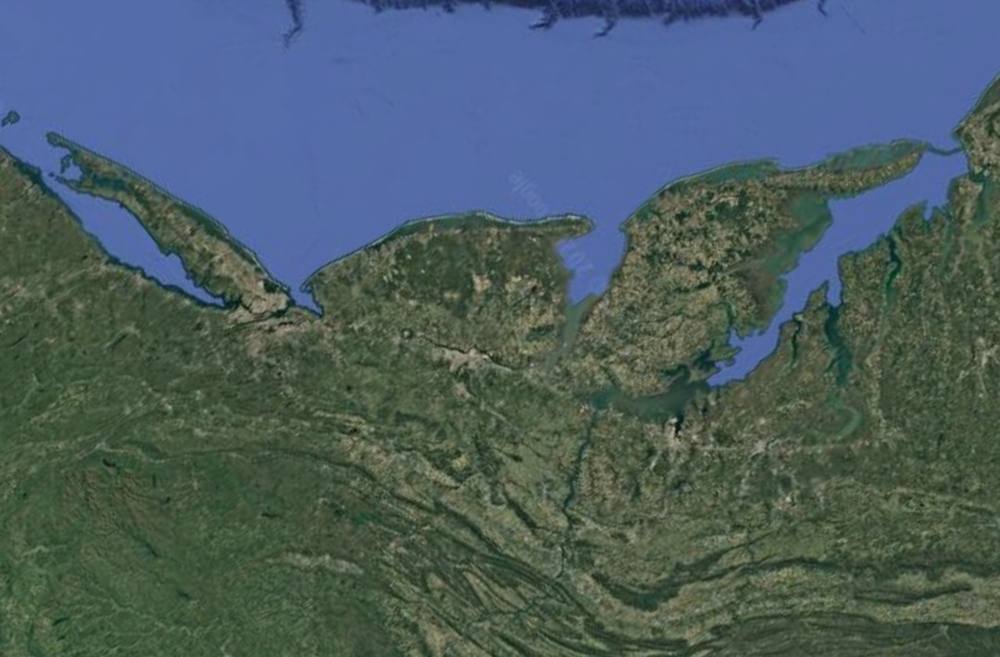
Unpainted regional terrain

Unpainted regional terrain

The recovered October source view, presented in its original rotated orientation. Coastlines and waterways are visible without the illustrated face or feathers. This is a map screenshot, not a new satellite survey.
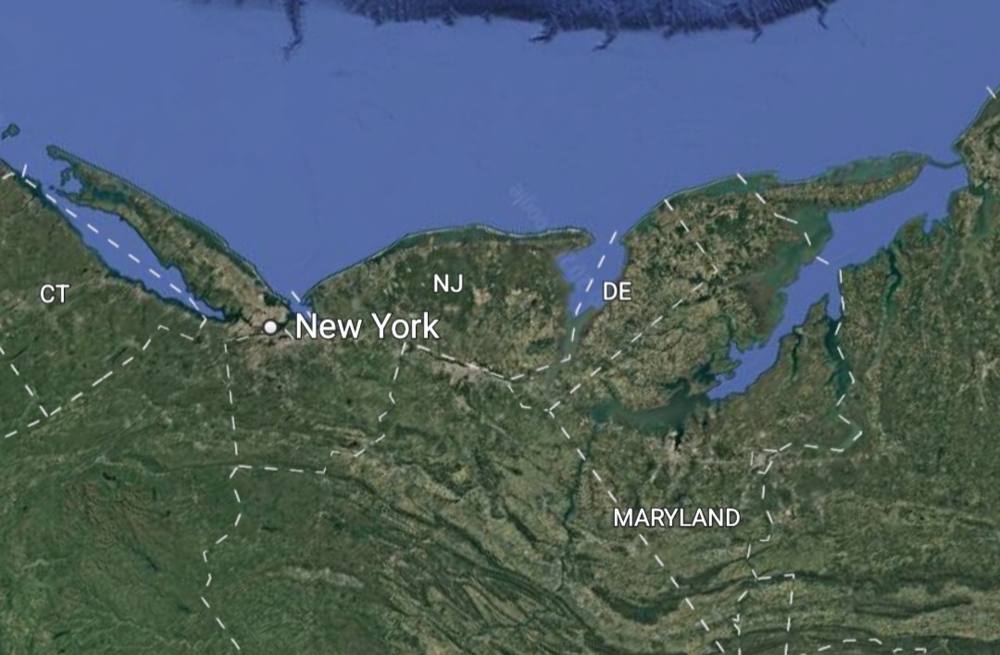
The same region with place labels

The same region with place labels

New York / Long Island lies on the left of this rotated view, New Jersey near the center, and Delaware / Delmarva on the right. Screen-left and anatomical “right” are not interchangeable.

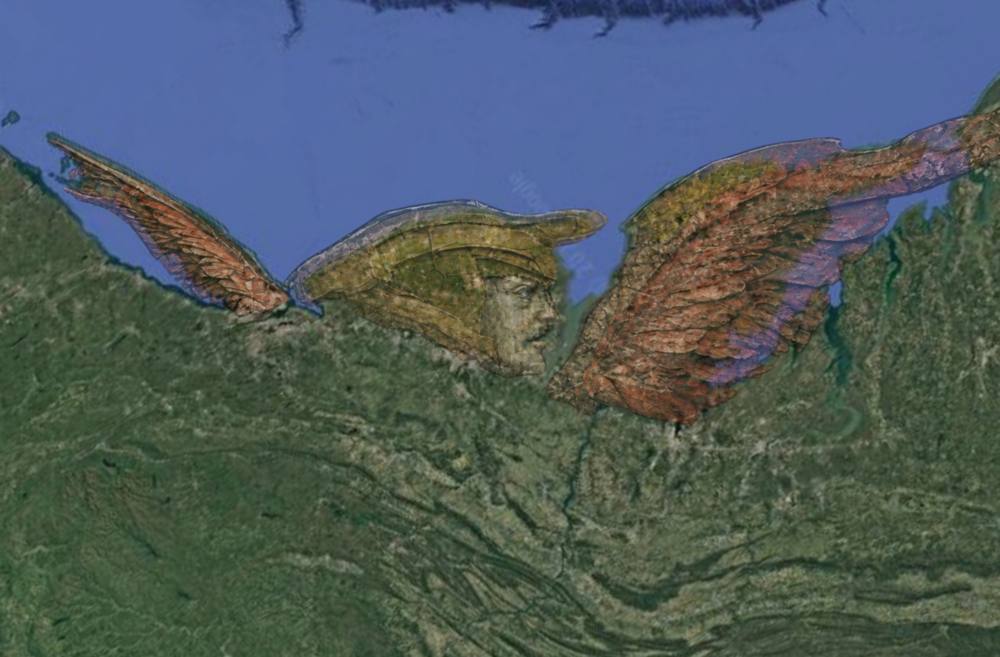
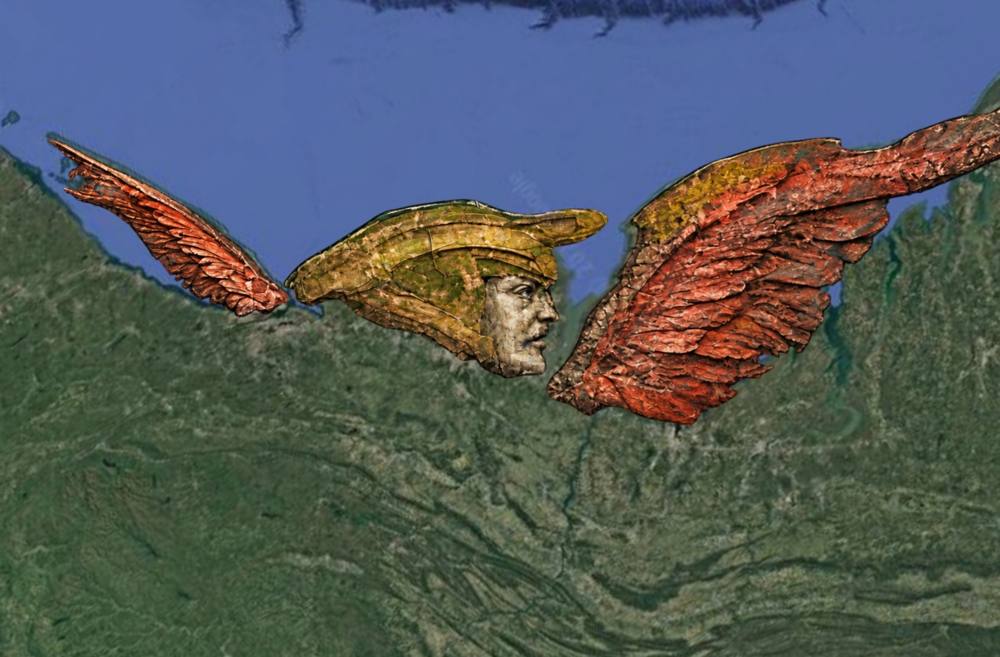
Brett reads the New Jersey profile as a helmeted head, the New York-side extension as a stripped or segmented arm/wing, and the broader Delmarva side as a fuller feathered wing. These are the project’s feature labels, not established geological anatomy.

Brett’s leading interpretation: a fallen angel

Brett currently favors a fallen-angel reading because the proposed fingers at the Long Island end of the stripped or de-feathered arm appear to him to make an “OK” gesture, which he interprets as three sixes, or 666. He thinks the gesture may carry meaning, while emphasizing that the scene remains open to interpretation.

An alternative reading is a winged or armored angel without a settled fallen identity. Both readings are retained here. The proposed hand is a visual interpretation of the landform; its “666” meaning is Brett’s symbolic reading, not a universal meaning of the OK gesture. This Northeast figure is separate from the Fallen Angel of the Appalachians.

Explore both interpretations in the dossier →

Watch the interpretation take shape.

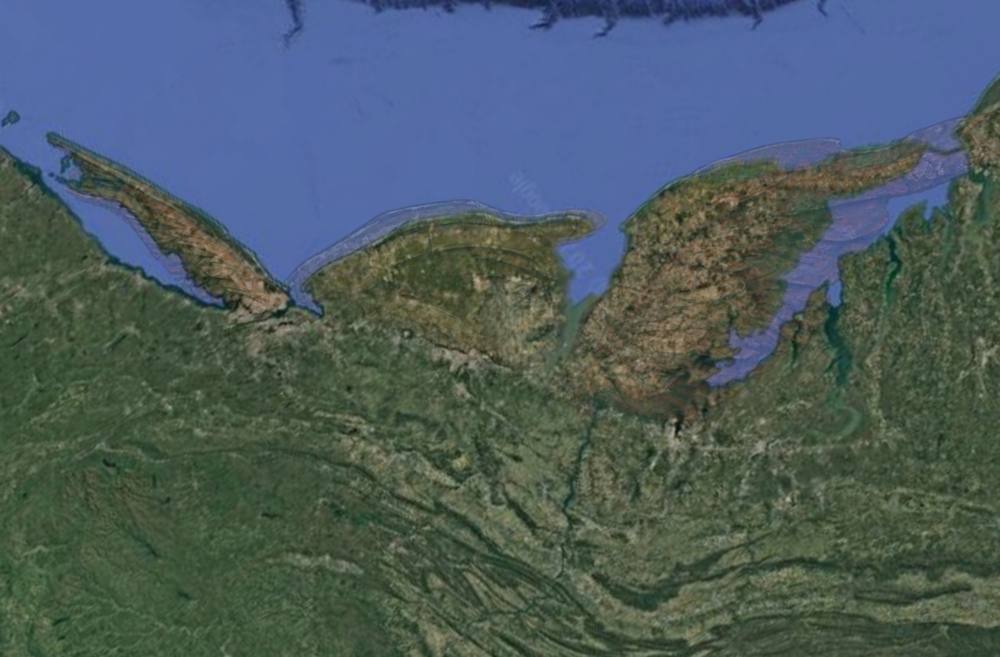
These three recovered frames move from a faint artistic overlay to the fully illustrated face, helmet and wings. Compare each with the unpainted map above. The added anatomy is artwork; it is not a newly detected terrain layer.

Light overlay

Light overlay

A first indication of the proposed profile and unequal wings.
Intermediate overlay

Intermediate overlay

The illustrated contours become easier to separate from the coastline.
Full artistic overlay

Full artistic overlay

Gold helmet, face and feathers complete the visual reading.

One landscape. Several artistic treatments.

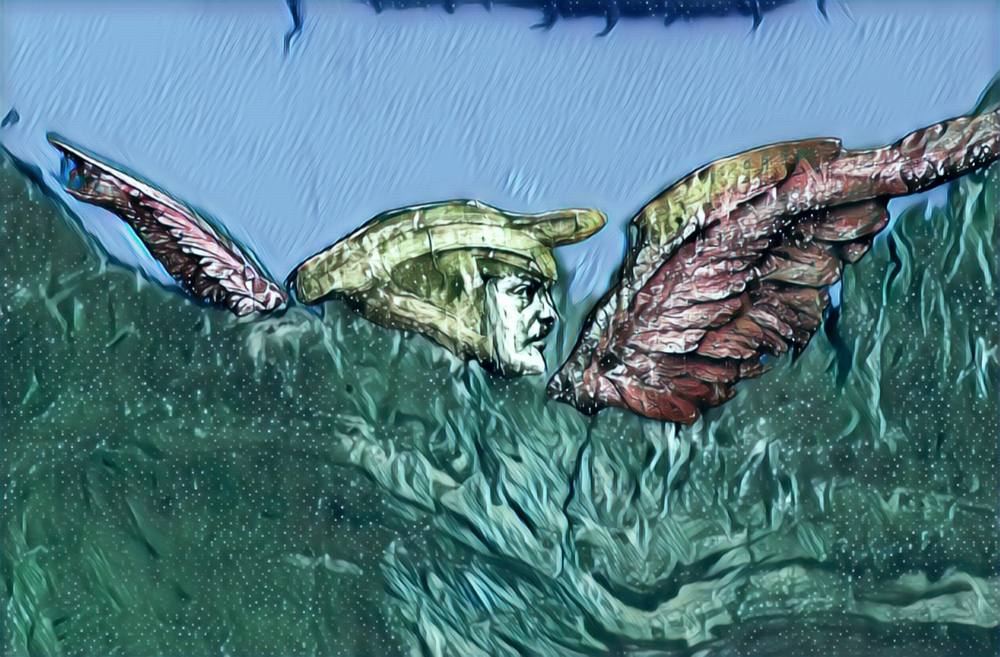
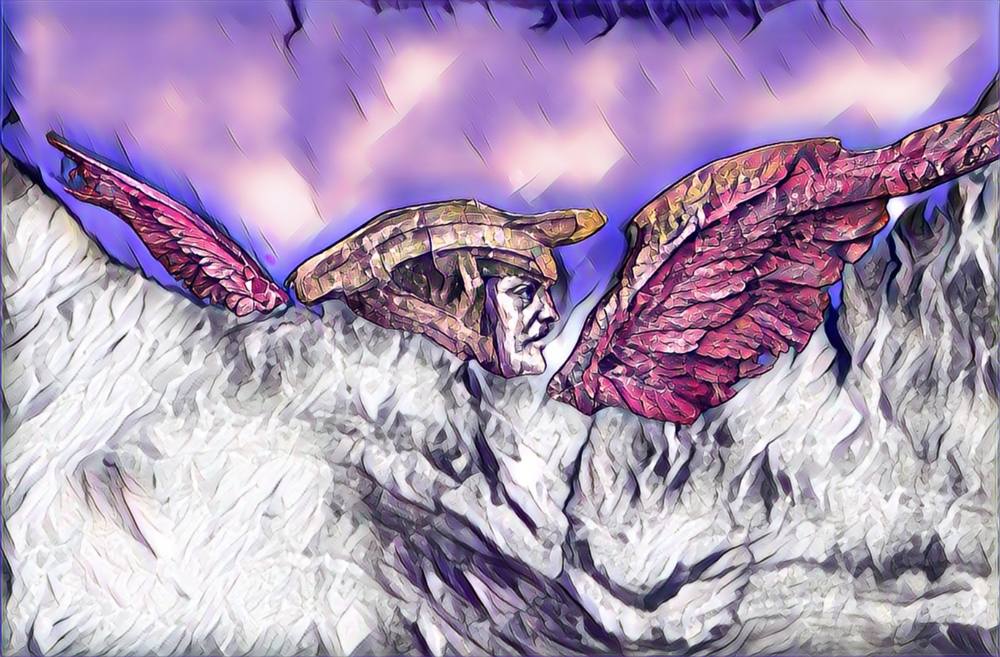
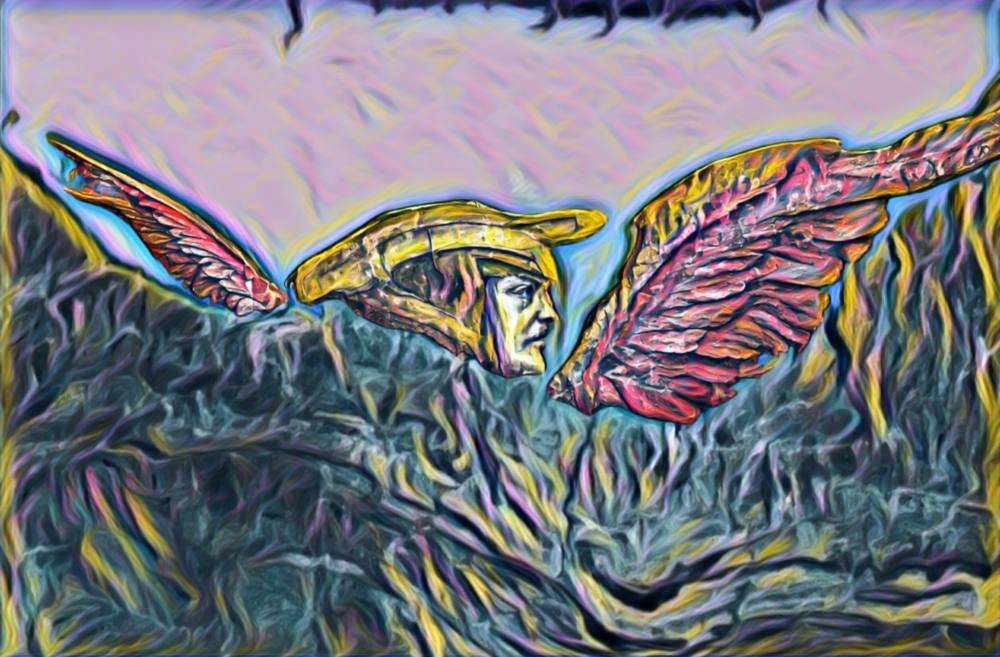
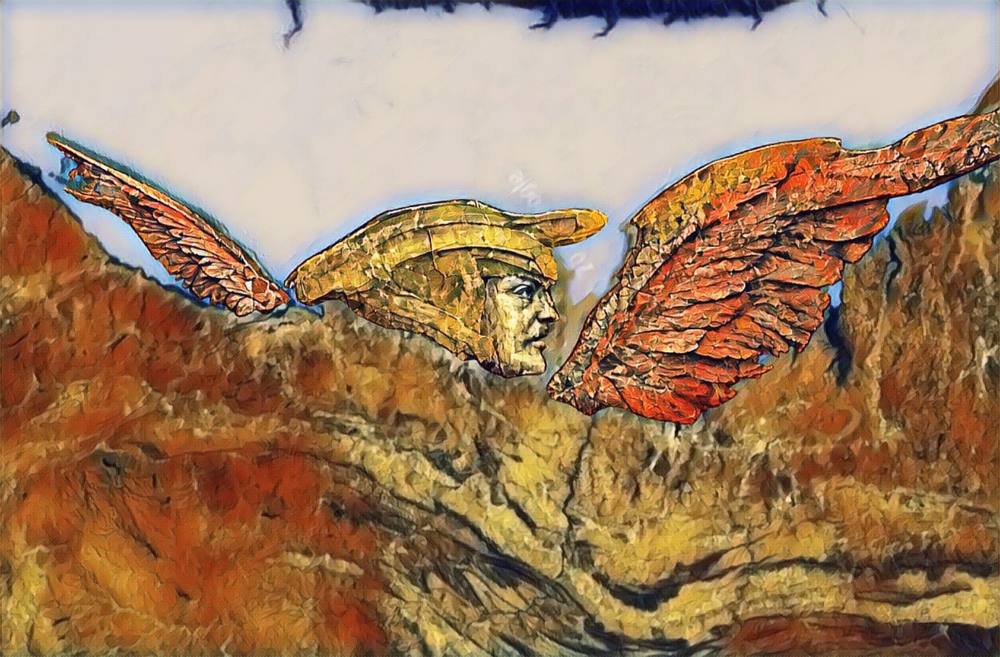
Recovered from the October 21 image set used in the narrated short. These variations explore palette, feather texture, light and atmosphere. Their terrain-like textures are stylized; none replaces the original map or a geographical boundary trace. Open any image for a closer look.

Gold and earth tones

Gold and earth tones

Warm light and a strongly defined helmet.
Blue and violet study

Blue and violet study

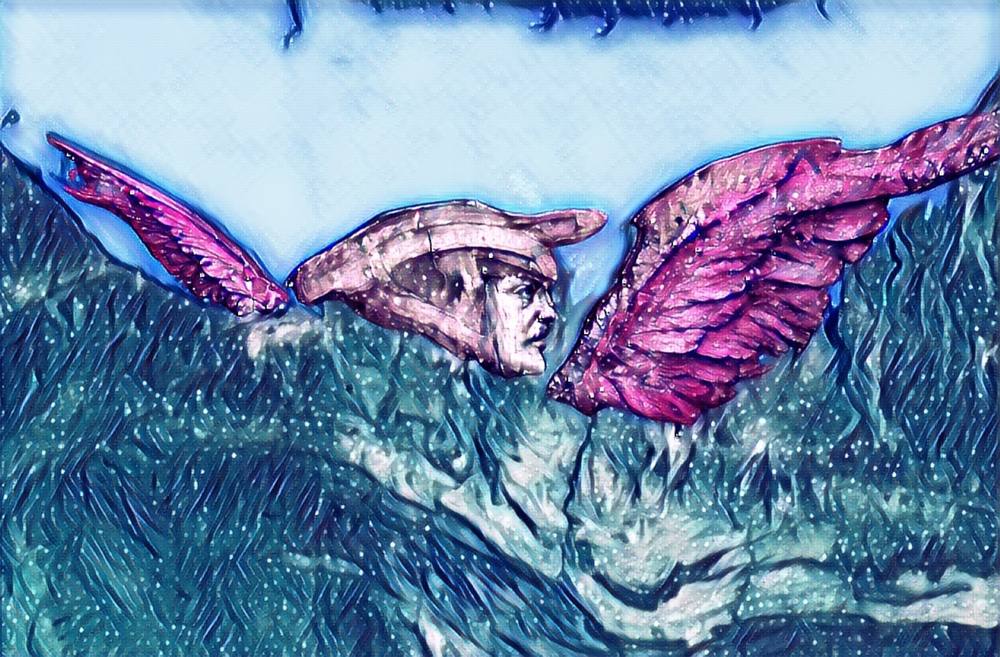
A cool-toned treatment of the profile and unequal wings.
Pale-wing study

Pale-wing study

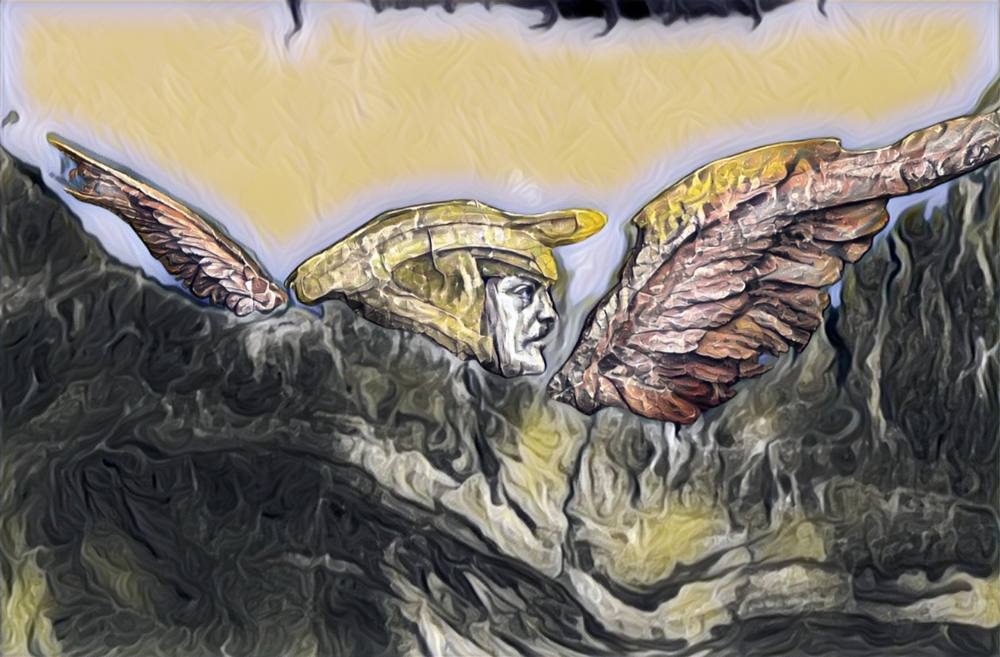
Ivory feathers and darker relief, interpreted artistically.
Green terrain study

Green terrain study

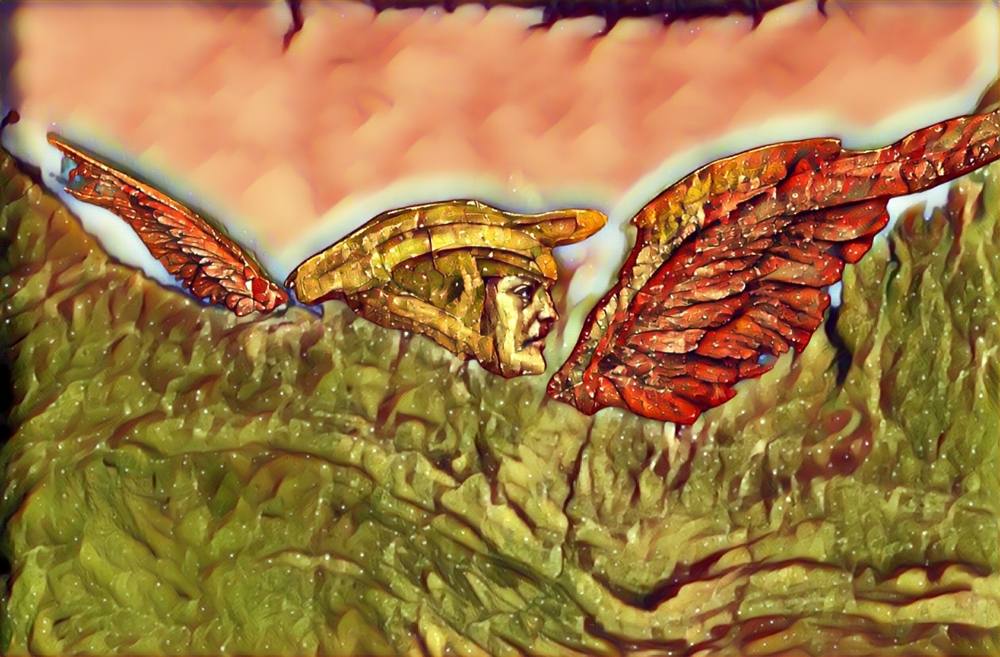
A more earth-colored surface and pale helmet.
Cloud and mountain study

Cloud and mountain study

A dramatic landscape reconstruction with invented cloud and relief effects.
Color-line study

Color-line study

Bright contour accents make the proposed anatomy prominent.
Orange relief study

Orange relief study

A warm, high-contrast reconstruction of the same visual idea.

Five recovered Northeast Angel videos.

Start with the latest dedicated narrated short recovered for this update, then compare the earlier edited presentation with the original map recordings. The four historical uploads were already cataloged on July 27, 2026; their upload date does not establish when they were filmed. The historical recordings are compact web copies with full durations preserved. They are different presentations and views of the same proposed figure, not five independent confirmations.

1. Narrated terrain-to-art introduction · 1:00

October 21, 2026. Uses the recovered terrain and artwork set, with synthetic narration and symbolic connections to salvation and shelter.

Read the narration

Look at this coastline, then watch what appears in the overlay. I call it the Northeast Angel. Across this northeastern American landscape, I see a helmeted face between two wing-like forms. First, compare the unmarked terrain with the gradual reveal. Then look closer at the face, the wings, and their relationship to the whole. The detailed feathers and armor belong to the artwork. The geography is what we are comparing it against. To me, the image brings together protection, watchfulness, and spiritual strength. The helmet recalls the helmet of salvation in Ephesians. The wings recall the image of shelter in Psalm ninety-one. Those are symbolic connections, not proof that a particular angel is physically here. Now return to the terrain and look again. Don't take my word for it. Go look at God's creation for yourself. Continental Titans.

2. Original edited presentation · 0:39

An early social-video treatment moves from the regional map through the wing and head comparisons to a separate angel artwork. Its historical title says “Fallen Angel.” Here that label refers to the Northeast figure, not the separately cataloged Fallen Angel of the Appalachians. The original wording is preserved as interpretation.

3. Google Earth pan and rotation · 0:41

The original mobile recording changes viewing angle and zoom, showing how the coastline reads as the camera moves. Map controls and original labels remain visible.

4. Historical map exploration · 2:09

A longer mobile recording includes the original project pins and regional map exploration. Retained as source history and a view of how the landscape was explored.

5. Landscape map capture · 0:04

A brief landscape recording of the unpainted regional map. Useful as a quick visual reference; its short length and screen capture do not make it independent survey evidence.

Go deeper into the dossier.

Explore the source history, the New York–New Jersey–Delmarva geography, the contrast between the two appendages, and biblical and art-historical comparisons. The expanded dossier distinguishes Brett’s faith-based reading from what geological and textual sources establish.

Read the expanded research dossier →

See the Angel in the wider North American Tableau →