The features within a figure
I look at proposed faces, limbs, proportions, curves, and smaller forms. The question is whether the interpretation holds together when the original terrain and the details are examined.
New to the Great Knife-Wielding Ape? Compare the south-up terrain and working maps, then explore the hypothesis and selected research. Start here →
Brett Rosiere · Faith, discovery & research
What I believe. Why I believe it. What it could mean. The journey that brought me back to Jesus Christ.
Geography is more than a map of the world around us. It is part of God’s creation, and I believe that looking at it with open eyes can lead us to deeper questions about our Creator and our place in His creation. My hope is that exploring these connections will encourage others to seek God, discover Scripture, and see the world around them in a new light.
Rooted in Christian faith, Continental Titans is an artistic exploration of Earth’s geography and its possible connections to Scripture, mythology, and ancient legends.
The underlying terrain is visible in satellite imagery, and you can look at it yourself in satellite-mapping apps. My overlays are artistic guides to help you see the forms I interpret in that terrain. They do not change the underlying geography. Compare the original imagery with the overlays and decide what you see.
The Continental Titans thesis
What if the Earth is telling us a story far greater than we ever imagined? My research follows the connections I see between life, decay, land, and the stories people have carried through time.
See the landscape. Then the interpretation.
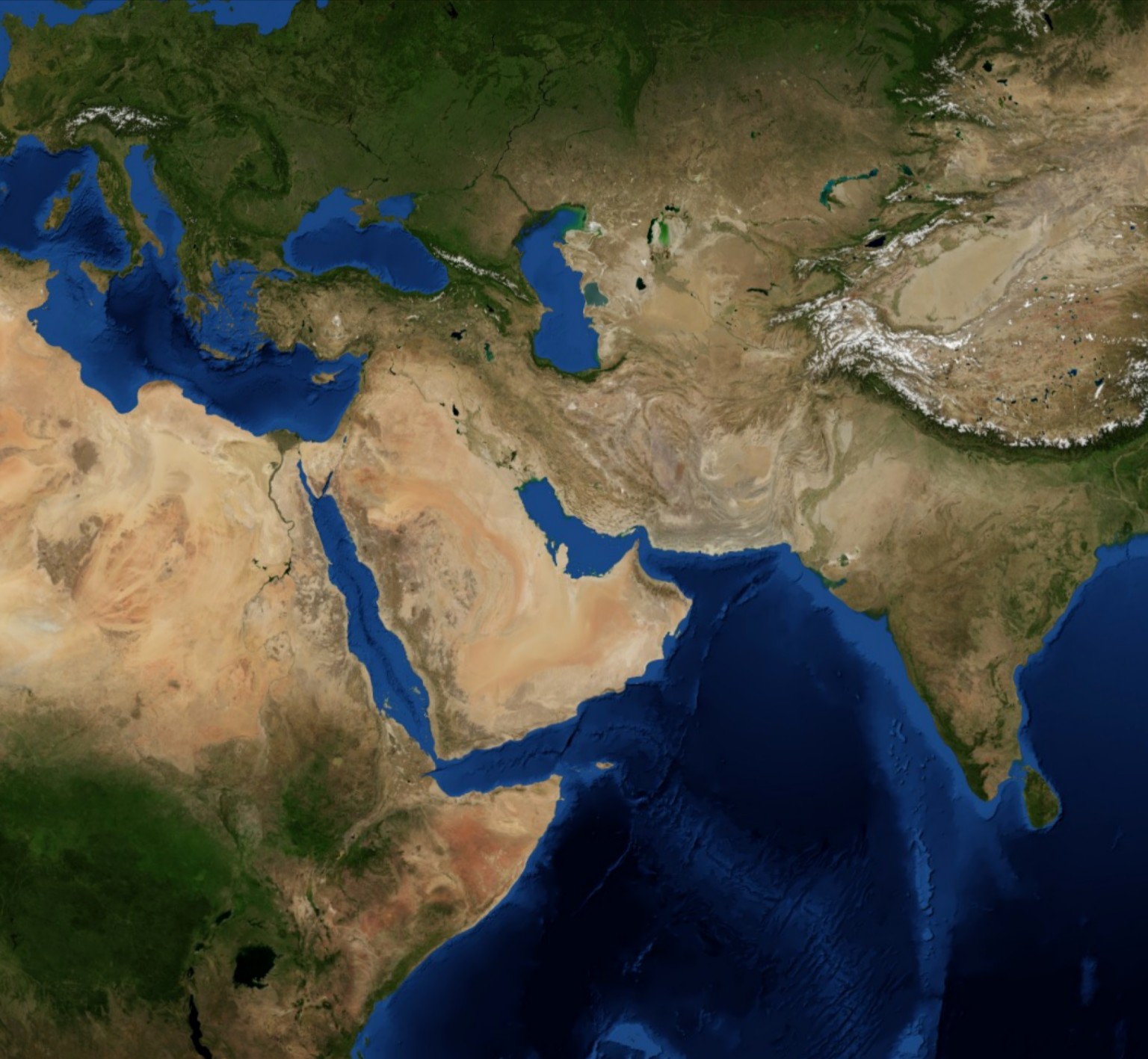
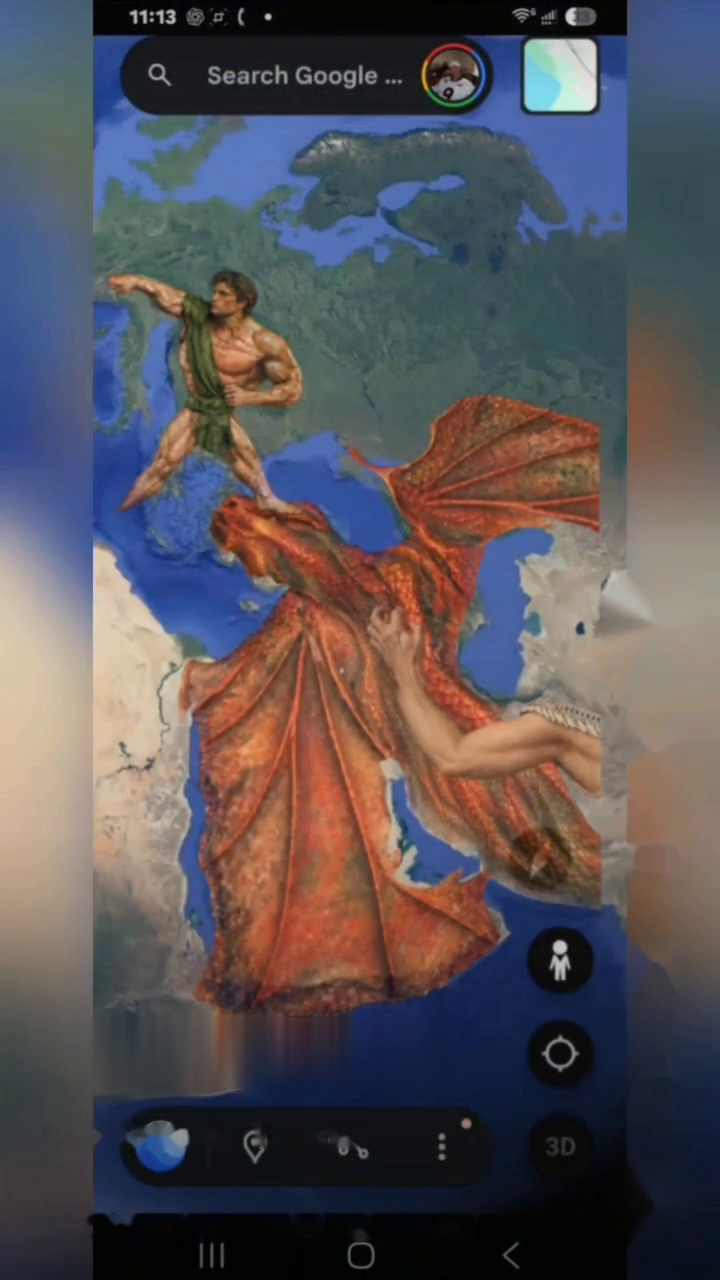
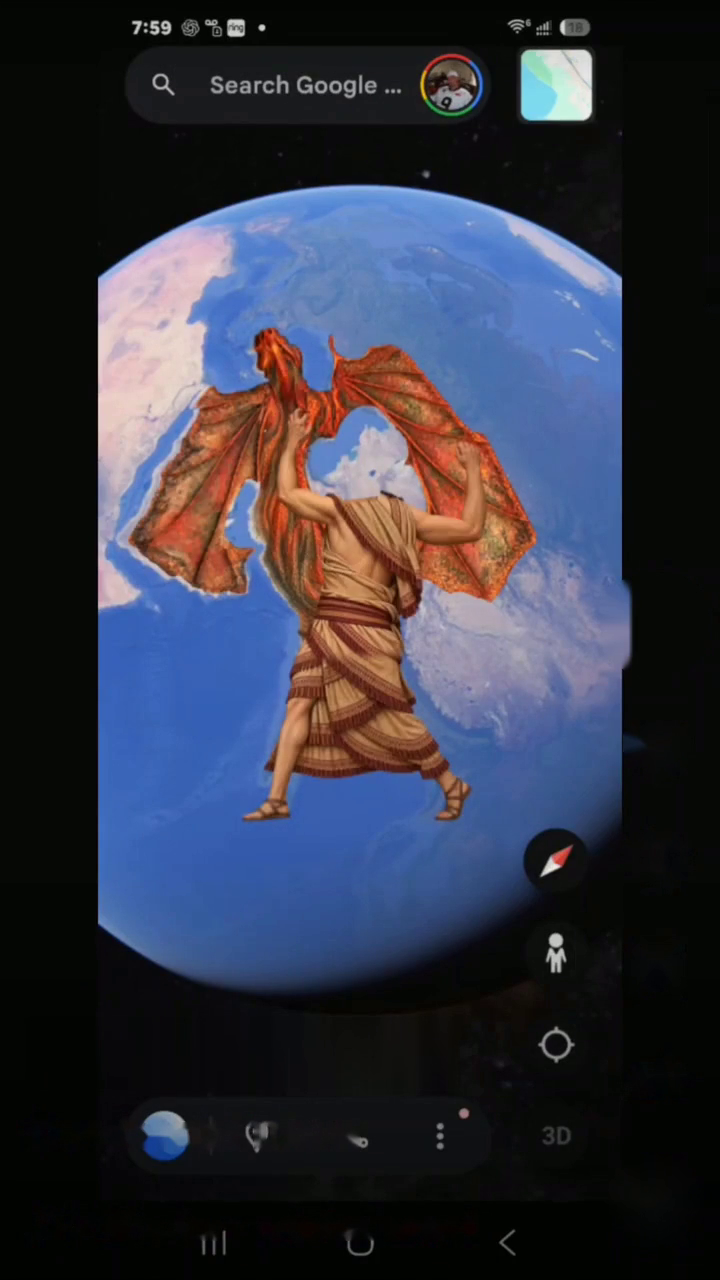
Start with the terrain, then compare it with the forms I see. The satellite reference shows the region without illustrated figures. Beside it are the newer overlays from my narrated theme film, showing the scene from two perspectives.
Featured full-length documentary
In this full-length documentary, I take you through the terrain, the places I’ve marked, and the overlays showing the figures I call the Prince of Greece, the Prince of Persia, and the Great Middle Eastern Dragon. I explain how the scene connects with Genesis 3:15 in my testimony, then explore Daniel, other biblical passages, and ancient serpent-conflict stories, including Illuyanka and Zeus and Typhon. The film brings these layers together while distinguishing the visible geography, the ancient accounts, and my interpretation.
The Continental Titans theme film
The Genesis 3:15 scene and why it matters to me, in my own voice.
Flashing images: This video contains rapid flashing and transitions that may trigger seizures in people with photosensitive epilepsy. Viewer discretion is advised.
Recovering meaning. Testing interpretations. Glorifying the Creator.
I want Continental Titans to help people look carefully at the Earth, examine the stories told about it, and ask how those stories have shaped what we believe. I am investigating whether ancient accounts preserve connections to the landscape that deserve another look.
That begins with access to the source material. You should be able to examine the terrain before seeing my outlines, read an account in its historical context, and distinguish what can be observed from what I believe it might mean.
My Christian faith is central to why this matters to me. This investigation is part of my testimony of returning to Jesus Christ. My purpose is to glorify the Creator. I also want the geographic and historical claims, including the ones I feel most strongly about, to be tested on their own evidence.
“Here is what exists. Here is what I see. Here is why I believe it matters. Now examine it for yourself.”
That is the invitation I want Continental Titans to offer: an atlas people can explore, a testimony they can hear, and an investigation they can question.
Coming Soon
Explore the Earth. Document its terrain. Contribute to a global atlas.
The Global Aerial Research Network is a planned initiative. Contributor registration and footage submissions are not yet open.
Continental Titans is developing a worldwide network of drone pilots, aerial photographers, researchers, and explorers to help document Earth’s extraordinary geography. From mountains and coastlines to river systems and ancient landscapes, aerial imagery can help us take a closer look at the formations we study. You may already have footage of a location we’re researching without even realizing it.
Our vision is to bring together existing aerial footage, new geographic surveys, satellite imagery, original interpretive overlays, and independent observations within the Continental Titans Interactive Atlas.
Satellite imagery shows the full picture of continent-scale formations. Drone footage would help us document smaller features and see details the wider view can’t show. One example is a dragon-like formation in Greenland that I estimate to be about two miles long. Existing footage or overlapping aerial views could help document parts of a formation like this.
Whether you share our interpretations or simply enjoy exploring the Earth, your observations may contribute something valuable.
No gatekeeping. No subscriptions. An invitation to explore God’s creation together.
01 · The belief
I believe the Earth’s patterns carry meaning. My hypothesis is that some immense geographical formations may be primordial biological beings or their remains, connected through relationships and actions that helped shape the world.
I am exploring how their apparent anatomy, the smaller patterns within them, and their connections to Scripture, ancient stories, archaeology, and geology fit together. Through my Christian faith, I also consider whether these formations may be signs pointing us toward the Creator.
The proposed biological identities and actions are hypotheses. The geographic features can be examined; their identity, origin, and meaning require further investigation.
02 · The reasons
I keep looking because of how the details appear to fit together: features within a proposed figure, its position in the landscape, and its relationship to other forms. I follow those connections into Scripture, ancient accounts, and the physical history of the land.
I look at proposed faces, limbs, proportions, curves, and smaller forms. The question is whether the interpretation holds together when the original terrain and the details are examined.
I consider orientation, points of contact, and what lies between the figures. The Great Fish in Sinai and the Princes and the Dragon are two places to begin following those connections.
I compare the geography with Scripture, mythology, ancient history, geology, and archaeology. I also investigate recurring patterns across scales and the relationships between water, energy, and living systems.
A resemblance, a measurement, an ancient account, and a spiritual interpretation each need to be considered on their own terms. My testimony explains my conviction; the research gives you material to examine for yourself.
03 · The implications
If the central hypothesis of Continental Titans is true, it could change our understanding of the ground beneath our feet and the history we have built upon it. I am investigating the possibility that enormous primordial beings, their remains, and their relationships are recorded in Earth’s landscapes. If that were established, we would have to ask new questions about how those landscapes formed, what Earth has preserved, and where humanity fits into that history.
The scale of the question grows as these investigations connect. The Great Ape research reaches into questions about human origins and the places where ancient tools and hominin remains have been found. The Great Fish opens a comparison with Jonah. The Princes and the Dragon bring geography into conversation with Genesis 3:15. Across the work, I examine proposed anatomical forms, connected scenes, and patterns that appear to repeat at different scales. Each connection needs to be examined on its own merits. Together, they explain why I believe this work deserves a much wider investigation.
If meaningful connections between these landscapes and ancient accounts could be independently demonstrated, the implications would reach into geology, archaeology, mythology, and our understanding of human memory. We would need to reconsider what some ancient stories might preserve and how that knowledge could have passed between generations. Recurring structures would raise further questions about the processes that formed them. The challenge would be to establish which connections are real, how they arose, and what they can actually tell us.
As a Christian, I also approach this work through my faith in God and the significance of Scripture. These questions touch creation, the meaning of our past, and our responsibility to seek truth. My faith gives this investigation personal importance, while the physical claims still need evidence that others can examine and test.
04 · My testimony
For most of my adult life, I was an atheist. I mocked Christians and did everything I could to dispute their beliefs. Then one day, while checking the weather for my pool service work, I came across a feature down in Antarctica that looked biological to me.
I showed my girlfriend, Tiffany, what I was seeing. I wondered whether it could be something like the Kraken of mythology, and I thought about the sea creatures described in the Bible. As I zoomed in and out, Tiffany noticed another formation at Drake Passage that looked like a dragon.
Now there were two things that had caught our attention. It blew my mind.
After that, I started spending a couple of hours every day exploring Google Earth. Those first two discoveries made me want to keep looking.
I turned toward North America and began exploring closer to home in Louisiana. I was looking at a more zoomed-in scale, finding a few things here and there that caught my attention. Then I realized something: the first two formations that had drawn me into this were enormous. I needed to step back and look at that larger scale again.
So I started zooming out, searching across the continents and oceans. I found more features that interested me. Then I had a thought: Let me move toward the Holy Land. Let me look there.
That is where I found the formations I call Mount Moses and the Great Fish. Those discoveries opened up connections with Scripture for me. I began seeing convergences between the geography I was exploring and the biblical accounts I was considering.
Shortly afterward came the formations I interpret as the Prince of Greece and the Prince of Persia, and the connection I saw to Genesis 3:15. I saw what I interpret as the Prince of Greece striking a dragon’s head, with the Prince of Persia connected to the same scene. When I connected it to Genesis 3:15, it became the turning point for me.
It put the fear of God in me, restored my faith, and brought me back to Jesus Christ.
What began with checking the weather became a search that changed my life. That search grew into Continental Titans, taking me through Scripture, mythology, ancient legends, history, and the connections between them.
This is my testimony of what I saw, how I understood it, and how it changed my faith. The formations and their proposed identities remain things to investigate. My return to Jesus Christ is the personal turning point at the heart of this journey.
An invitation
You do not have to share my faith or agree with my conclusions to take a serious look. Start with the original imagery, compare it with the interpretation, and consider alternative explanations.
The actual terrain must remain intact. Interpretive outlines and overlays show what I see without reshaping the landscape to fit it. Original imagery and artistic interpretation must remain distinguishable.
Follow the questions further
The landscape is where this journey began, but the questions reach further. I’m exploring how patterns repeat across scales, how earlier events leave traces, and how those traces can shape what happens next.
The research pages introduce recursion and memory; RCIM, the Recursive Constraint–Information Model; water and material memory; and the Dust Cycle, my reading of dust, life, mortality and restoration across Scripture. Developing studies also examine caves and archaeology, animals and migration, plants and habitats, and fungi and ecological networks.
Follow a topic, read the sources, and see where the investigation stands. The pages distinguish established background, proposed models, theological interpretation and work that still needs evidence.
Explore the research →