Utah · Landscape interpretation
The Hopi Ant
The ant-like forms Brett sees in the Utah landscape, shown through his original markings and later artwork.
Follow the features
Brett calls this interpretation the Hopi Ant. His guide identifies curved ridges as antennae, dark patches as eyes, a central mouth area and bent leg-like forms. He describes the head as viewed almost straight on, at eye level.
The name is Brett’s proposed connection. This page presents his visual interpretation; it does not establish an identification in Hopi tradition or a biological origin for the terrain.
Landscape first
Image 1 · Recorded terrain
The terrain in Brett’s recording
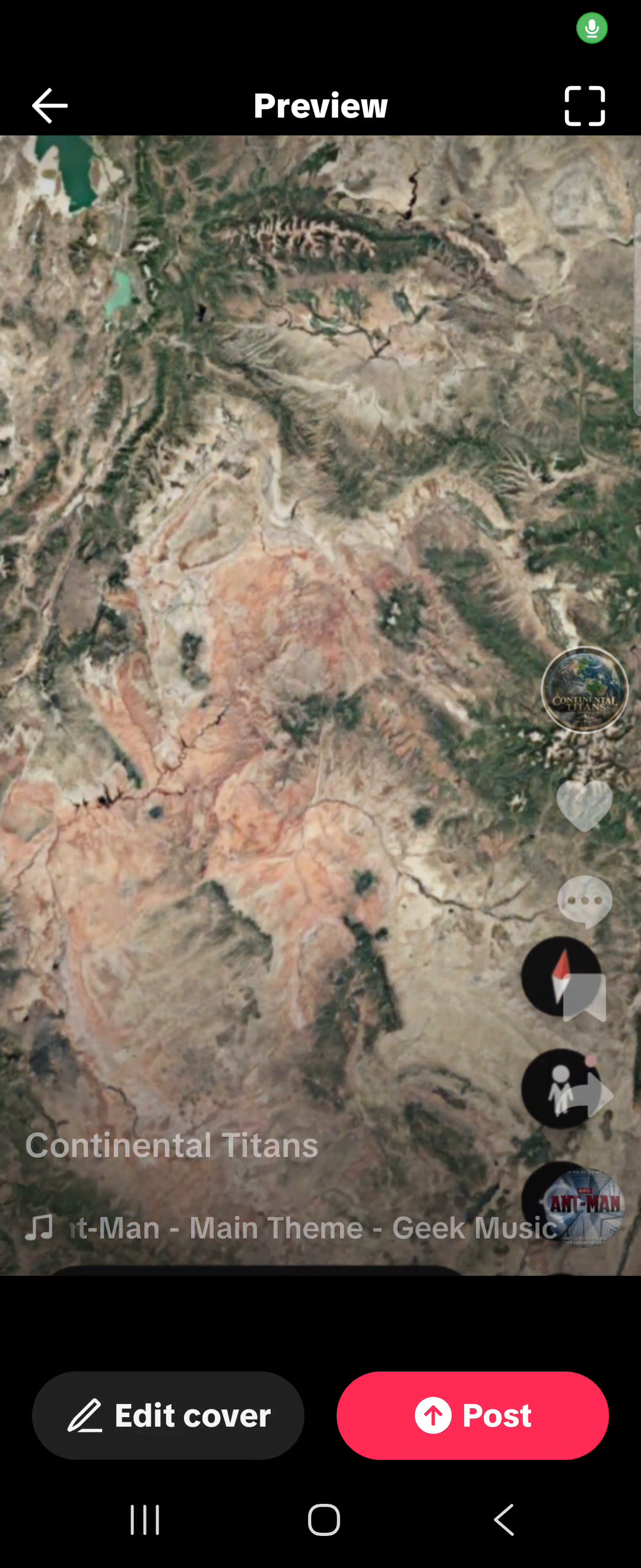
Frame at 1 second from Brett’s 35-second screen recording. The terrain view has no added ant illustration in this frame. TikTok preview controls, account marks and map controls remain visible. This is a compressed video frame, not the original satellite file.
The large lake at upper left, the east–west mountain range above the head area, the antenna-like ridges and the dark patches below locate the same scene shown in the marked reference and artwork. The frames have different crops and image treatment; they are not an exact registered comparison.
Step 2 · Follow the markings
The features Brett identified
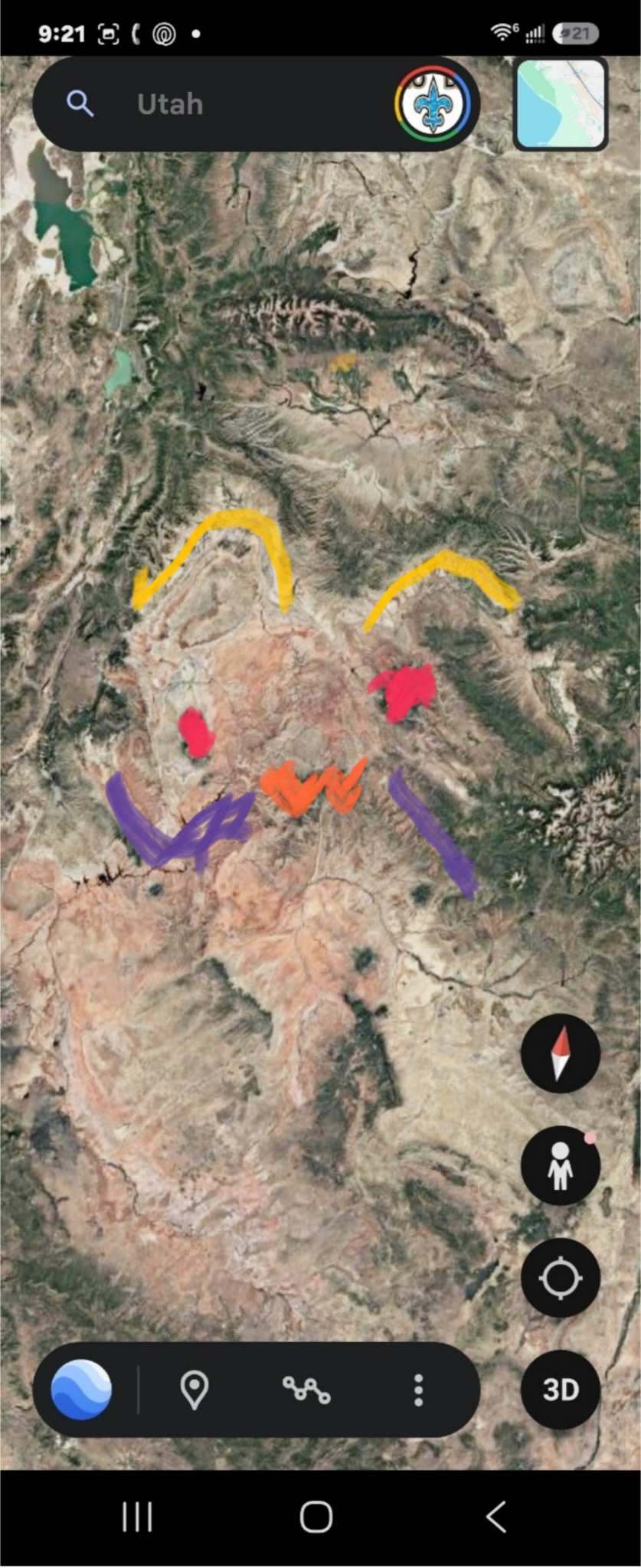
Image 2 · Annotated reference
Brett’s marked terrain reference
The October 29 source guide. Yellow marks identify antennae, red the eyes, orange the mouth and purple the legs. This is an annotated screenshot, not an unmarked terrain plate.
Step 3 · Return to the landscape
Look again without the markings
Step 4 · The artistic reading
From selected features to a recognizable figure
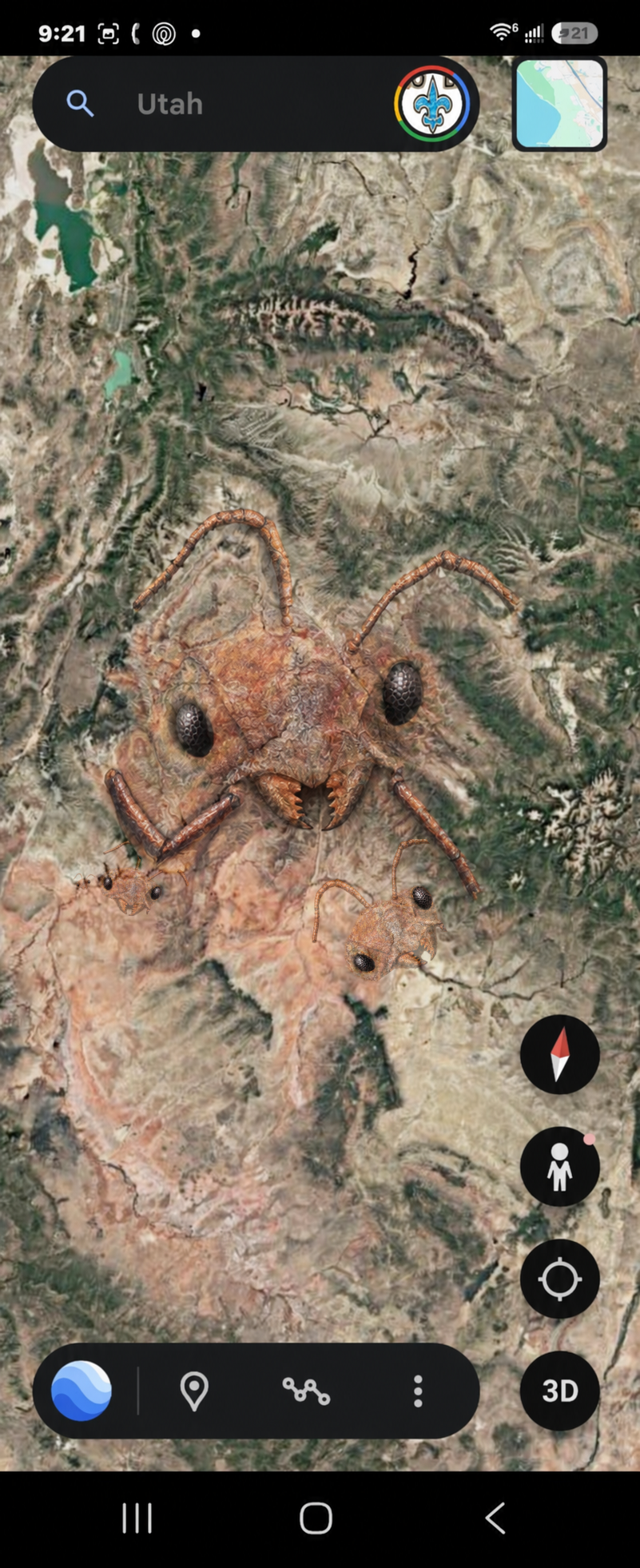
Image 4 · Artistic interpretation
The later artistic composite
The main ant interpretation with the smaller forms positioned beneath it. Brett identified three smaller eye pairs: two to the left and one tilted to the right. The tiny leftmost form is easy to miss at reduced size.
The illustration makes Brett’s interpretation visible. These are separate saved images, not a pixel-registered before-and-after pair. The main ant artwork was generated, and its earlier background was partly re-rendered. The later smaller-ant edit preserved that existing composite outside its added overlays. The artwork must not be treated as unaltered satellite evidence.
How the interpretation developed
The first artwork followed Brett’s color guide. He then pointed out smaller dark eye-like pairs below the main ant. After correcting their grouping and position, the smaller forms were placed over those marked locations rather than regenerating the whole scene.
The finished artwork is a guide to what Brett sees. The underlying landscape, the added figures and any historical connection should be considered separately.
Interpretive dossier
Reading the scene
The Hopi Ant begins with a particular way of looking at the landscape. Instead of looking down on a complete insect from above, Brett describes a nearly eye-level encounter with a head facing the viewer. That perspective explains why the antennae, eyes and mouth carry the interpretation.
The main head
In the marked reference, two yellow arcs rise above the proposed face. Brett reads these as antennae. The two red-marked areas sit below them as eyes, while orange marks pick out the central mouth. Purple marks trace the bent forms to either side that he identifies as legs.
Follow that sequence in the recorded terrain frame, then return to the markings. The purpose of the artwork is to make Brett’s reading visible: it adds the recognizable insect features over the scene he identified.
The smaller forms
The interpretation also includes smaller ant-like faces below the central head. In the later composite, the smaller forms appear at different angles rather than as a repeated row. Their position matters to Brett’s reading of a larger figure accompanied by smaller forms.
The gallery preserves the wider scene so these relationships can be considered together. Open each plate at its original size to look more closely at the small features, particularly the faint form at the far left.
Why the name matters
“Hopi Ant” is Brett’s name for this discovery and its proposed connection. The images here document his visual reading of the landscape. They do not establish that Hopi people identify this location or these landforms with a traditional figure. No account of Hopi tradition is attributed to a source that has not been recovered.
Landscape, markings and illustration
Each plate serves a different purpose. The recorded terrain frame shows the scene without the added ant illustration. The marked screenshot records the features Brett selected. The artistic composite translates those selections into an easily recognized figure.
The terrain frame is still a compressed recording, and the artwork includes generated imagery and a partly re-rendered background. Keeping those distinctions visible lets visitors follow the interpretation without mistaking illustrative detail for an original satellite observation.