Let the landscape come first
Move between the unmarked source screenshot and the artistic figure without changing the view. The artwork explains Brett Rosiere’s interpretation; the original remains available at every step.
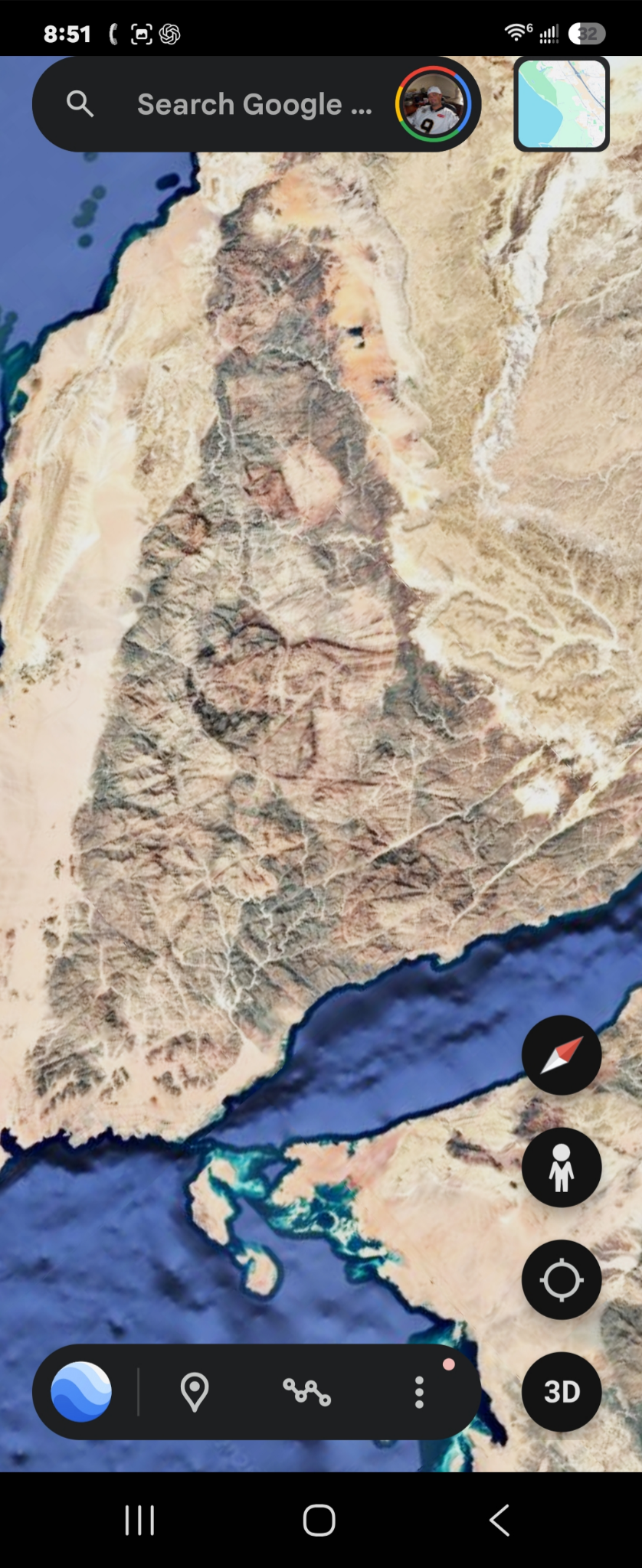
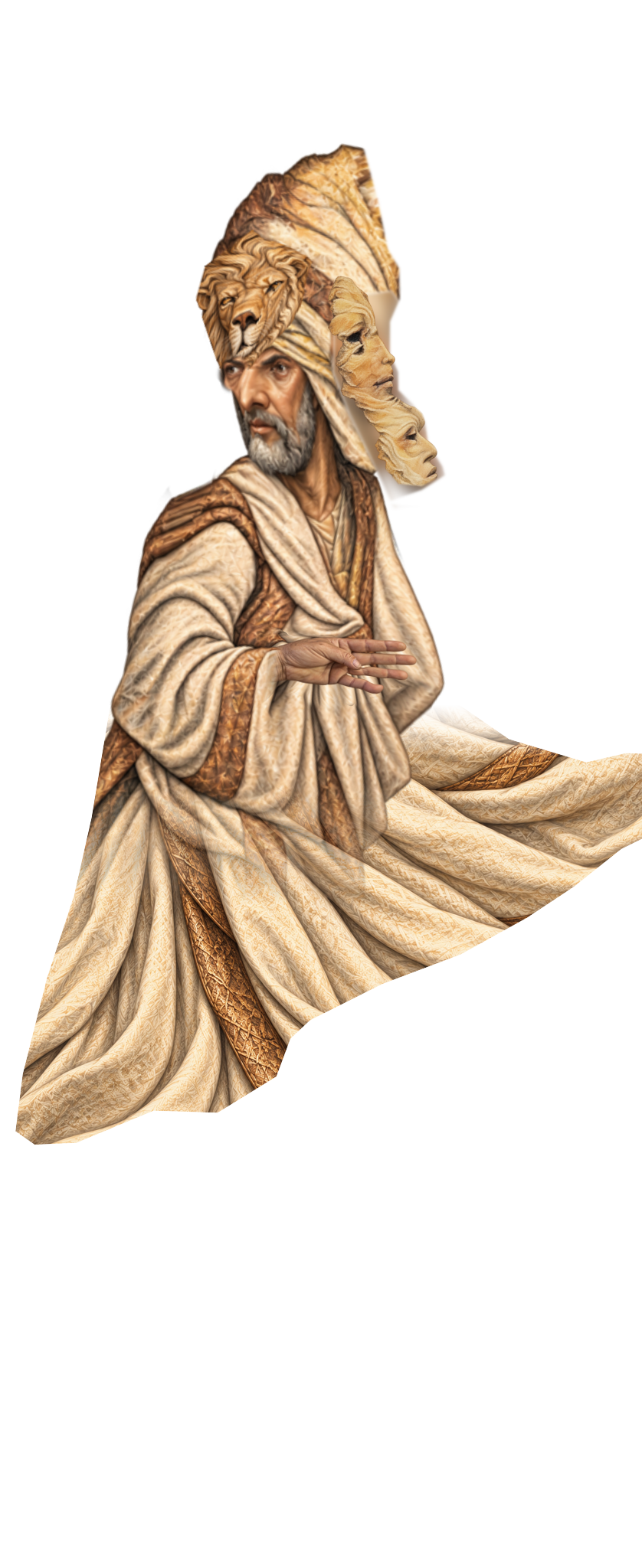
The source and transparent artwork share the same complete frame. Only the artwork’s visibility changes. Use the arrow keys while the slider is focused for small adjustments.
Follow the reading
Face and headdress: the main face sits beneath a lion-like crown, with two profile forms behind it.
Hand: a palm-forward gesture extends from the robe. Individual finger placement remains an artistic approximation.
Robe: the lower form follows the broad mountain wedge. No separate legs have been added.
Source, interpretation, artwork
The supplied screenshot, with its map interface preserved.
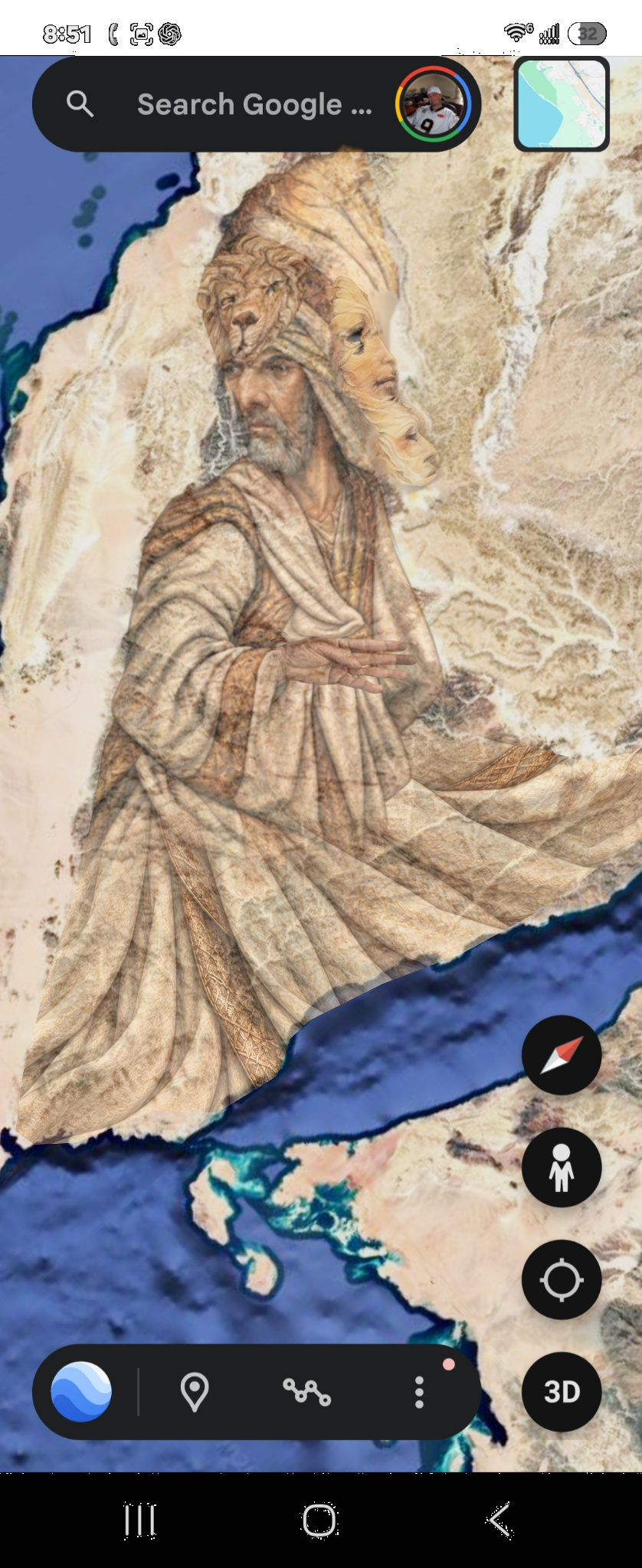
The delivered version 11 composite in the same frame.
The separate transparent figure, shown over a checkerboard.
A figure within the mountains
Mount Moses is Brett Rosiere’s working name for a human-form interpretation in the Sinai landscape. He reads a face beneath a headdress, a hand extending toward Israel, and a robe spreading across the mountainous ground. The page follows that reading while leaving the underlying screenshot visible.
The illustration grew from marked source images and repeated corrections to the face, crown, hand and lower robe. Those revisions matter: the intent is to show the form Brett sees in this particular terrain, rather than place an unrelated character over the map.
The face, crown and nested profiles
The main face looks out beneath a tall headdress. Above it, Brett identifies a lion-like face; behind it, two stacked profiles follow his interpretation of the cliff forms. Together, these details connect the larger human figure with the project’s recurring interest in smaller forms within larger ones. These are interpretive connections, not established identities of the landscape.
A hand pointing beyond the frame
The extended hand is central to the story Brett wants the image to tell. The recovered version shows the palm forward, with the thumb crossing the palm and the fingers opening from the wrist. He connects that gesture with Israel. The current frame does not show the whole proposed destination, and the fingers are an artistic approximation of his marked region.
Deliverance and the Sinai story
The name places the figure in conversation with the Exodus story. In Exodus 19, Israel reaches the wilderness of Sinai and Moses goes up the mountain to meet God. Exodus 20 presents the commandments as God’s words. These passages provide the scriptural setting for Brett’s reflection on deliverance, covenant and direction. They do not identify the pictured landform as a person. Read Exodus 19–20.
The wider Sinai connection
Within Continental Titans, Mount Moses belongs beside the Great Fish as a related Sinai interpretation. Keeping their images and explanations separate allows their proposed connection to be explored without merging the two figures or their source material.
A separate illustrated route
A later artwork version added a line from an illustrated Elijah journey reference. That route is deliberately omitted from this terrain comparison. It is a contextual annotation, not a line naturally visible in the land or an established exact connection to the hand. First Kings 19 describes Elijah reaching Beersheba and later Horeb; the text and any drawn route should be read as separate source layers. Read 1 Kings 19.
- Original: 1000030587.png, supplied November 2, 2026.
- On-map artwork: Mount Moses Palm Pose, version 11.
- Transparent artwork: the matching version 11 full-frame overlay.
The artwork remains an interpretation. The screen view and full image frame are preserved.